Julian Burns Carax's Works
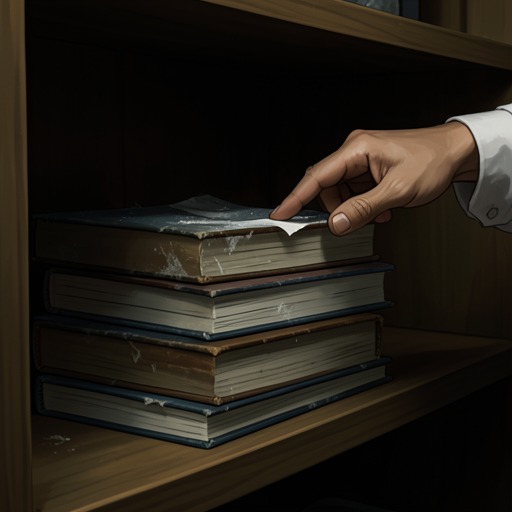
The Shadow of the WindJulian Carax’s destruction of his own books is both a personal rupture and an attempt to erase the work that has come to embody his losses. After learning that Miquel Moliner died under Carax’s identity, he turns against his novels and burns the copies he can reach. The destruction is incomplete: Nuria hides other editions, and Carax’s subsequent pursuit of surviving books extends the act into a prolonged campaign against his own literary legacy.
Background: A Life Recorded Under the Wrong Name
The episode is inseparable from the false official death that has shaped Carax’s history. In 1936, the authorities presented a body at the morgue as Julian Carax, identifying it through a passport and a copy of The Shadow of the Wind. The body was actually Miquel Moliner’s. After Miquel was killed, his corpse was left in an alley in the Raval quarter, and the disfigured passport found with it bore Carax’s name. Inspector Fumero recognized Miquel but signed the report confirming that the dead man was Carax, then ordered his burial in a common grave at Montjuïc. The official record thus made a friend’s death serve as Carax’s disappearance.
That substitution gives the novels a charged place in Carax’s crisis. They are not only books he has written: they are among the items that help make the false identity seem real, and they connect him to the life in Barcelona from which he has been separated. The books become targets as he confronts the consequences of the deception and the losses bound up with it.
The First Destruction
When Nuria finds Carax after his return to the Aldaya mansion, he is overwhelmed by anger and grief. He resents her deception and Miquel’s effort to give him a life that now feels like a wound; he also turns his anger against himself and the books to which he had devoted his life. In the early hours, after Nuria has gone home, he appears at her apartment. Smoke from the central-heating boiler leads her to the discovery that he has fed copies of his novels into it. Their leather-bound spines are reduced to ash, and the books on her shelves are gone.
One object is left behind: the fountain pen Nuria had bought for Carax years earlier in Paris, believing it had once belonged to Victor Hugo. He places it in a small case on her desk. The surviving pen stands in sharp contrast to the destroyed books: Carax has burned his own works but has not taken or destroyed this gift. The scene does not make his rejection simple or complete; it records destruction alongside an object preserved and returned.
Nuria’s Countermove and the Warehouse Fire
Carax’s attack on his books coincides with a threat to the publisher’s stock. The publisher’s son tells Nuria that a man calling himself Laín Coubert has asked to buy the entire supply of Carax’s novels held in a Pueblo Nuevo warehouse. Nuria recognizes that the name belongs to one of Carax’s fictional characters and understands that Coubert is seeking the books’ location, not making a genuine purchase. She takes copies kept in the older publisher’s office library and hides them in the Cemetery of Forgotten Books, where Carax will not find them.
The warehouse is nevertheless destroyed by fire. The blaze consumes tens of thousands of books, leaving a ruined structure and a river of ash; the night watchman reports that only the volumes he managed to save survived. Nuria learns that a badly burned man has been taken to Hospital del Mar and recognizes Carax. Her account makes the fire and the burning of the novels part of the same unfolding disaster, while distinguishing the copies she has already concealed from the books lost in the warehouse. Preservation and destruction occur side by side, neither able to cancel the other.
The Campaign Against Surviving Copies
Carax survives, but the destruction does not settle into a single episode. As he regains strength, Nuria sells possessions to support them, including the fountain pen. Carax accepts that she did the right thing. He then begins going out at night in a hat, scarf, gloves, and raincoat, returning with money or jewelry but offering no clear explanation of where he has been. Nuria finds a spring-operated knife among his belongings, and stories begin circulating about a masked figure who breaks into bookshops, libraries, and collectors’ studies, taking books and burning them.
By February 1938, a secondhand bookseller tells Nuria that Carax’s works are disappearing from the market. Collectors are frightened, and copies once held in private collections are being surrendered or removed. Letters addressed to Laín Coubert arrive from booksellers and collectors who have found a lost copy. Carax vanishes for days, sometimes a week, then returns with money; his unexplained absences and the messages from France show that the campaign has expanded beyond the books he could destroy in Nuria’s apartment or the losses in the warehouse.
Meaning and Outcome
The repeated destruction turns the novels into the focus of a conflict over memory and identity. Carax’s books help sustain the false account of his death, yet they are also the works to which he once devoted his life. His rejection of them follows not a clean escape from the past but an accumulation of betrayal, bereavement, and self-directed blame. That contradiction persists in the form of the action: he burns copies, while Nuria conceals others; the warehouse is lost, while letters continue to announce surviving editions.
The attempt to erase the books therefore never becomes absolute. Carax’s campaign can remove individual copies and frighten collectors, but the novels remain scattered among publishers, private collections, and the books Nuria has hidden. Their survival makes the destruction an ongoing struggle rather than a completed disappearance: Carax tries to extinguish the work, while the people and places around him preserve traces of it.